White Oak Kitchen Cabinets: What to Know Before You Choose Them
Align Cabinetry, Grand Rapids
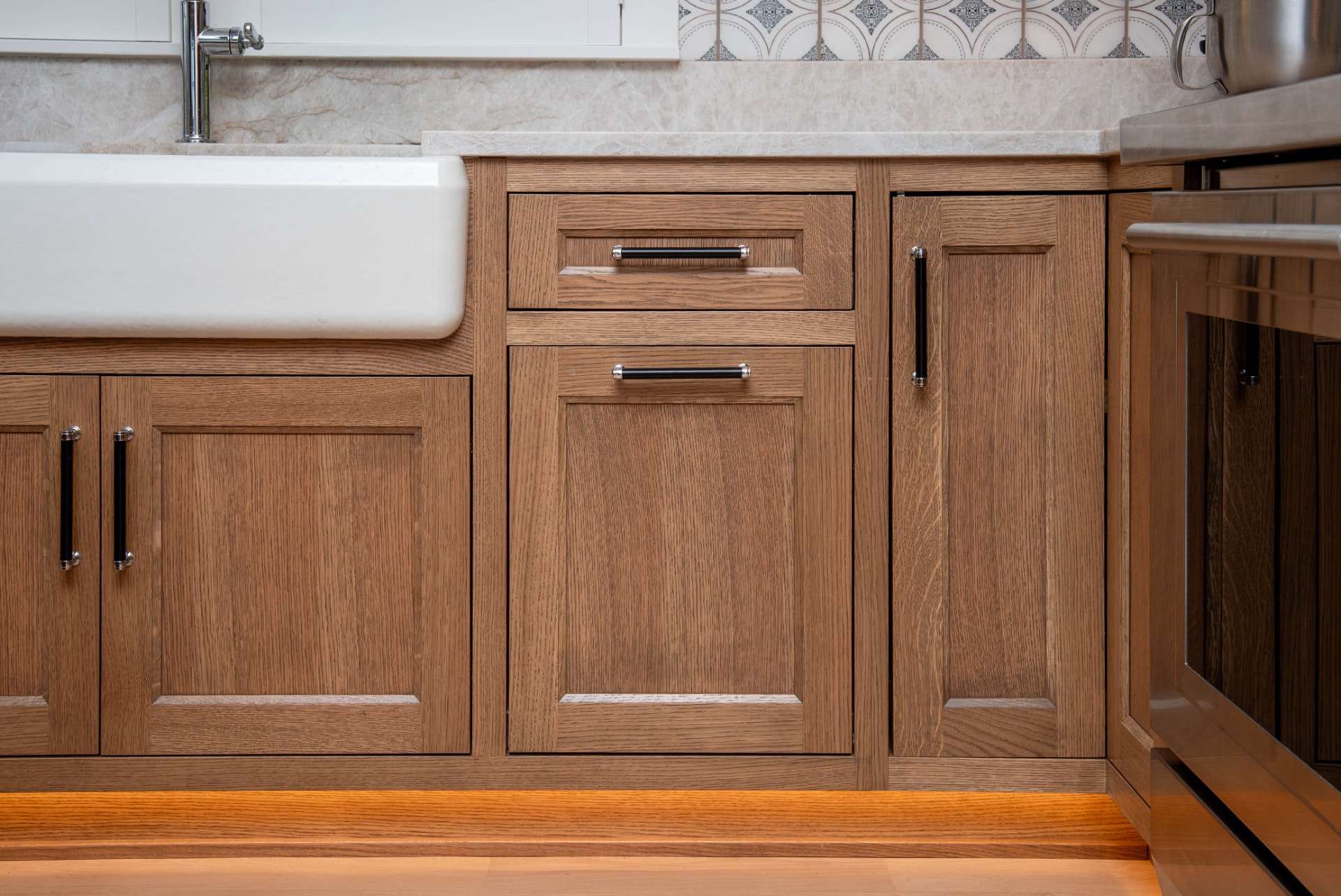
White oak cabinets are popular because the wood is strong, stable and warm without looking dated. The look you end up with comes down to three choices: how the wood is cut, how it's finished, and what it's paired with. Make those decisions together, early, and white oak can carry a kitchen for decades.
White oak comes up in a lot of the conversations at our Fulton Street showroom, in new builds and remodels from Grand Rapids to the Lakeshore. Here's what to know before you choose it.
Why white oak works in a kitchen
- Strong and hard-wearing. White oak is a dense hardwood that stands up to the daily use a kitchen sees.
- Naturally water-resistant. Its closed cell structure is the reason white oak has long been used for barrels and boats. It still needs a good finish, but it handles moisture better than many woods.
- Takes stain evenly. White oak accepts stain well, from a light natural finish to deep, smoky tones.
- Warm without looking dated. Today's finishes keep white oak light and natural, a long way from the orange oak cabinets many people remember.
Plain-sawn or rift-sawn: the cut changes the look
The same tree can look very different depending on how it's cut.
- Plain-sawn is the most common cut. It shows the arching "cathedral" grain most people picture when they think of oak. It feels traditional, relaxed and a little rustic.
- Rift-sawn oak is cut at an angle to the growth rings, which produces straight, linear grain. It reads calmer and more modern, and it's more stable. Because the cut uses less of each log, it costs more.
Our Calming Oak project in Grand Haven uses rift-sawn white oak, and the straight grain is a big part of why the kitchen feels so quiet.
Choosing a stain
White oak's color shifts a lot with the finish. A natural finish keeps it light and warm. Gray tones cool it down for a softer, Scandinavian feel. Darker stains add depth while still letting the grain show through.
Our stain options include Natural, Warm Gray, Iron, Chestnut Gray and Whitewash. Not every stain is offered on every species, so we'll show you which ones work on white oak.
Whatever direction you lean, judge it on real samples in your own light. Photos can't show the true color of wood, and the same stain can look warmer under west-facing windows than it does under north light.
What to pair it with
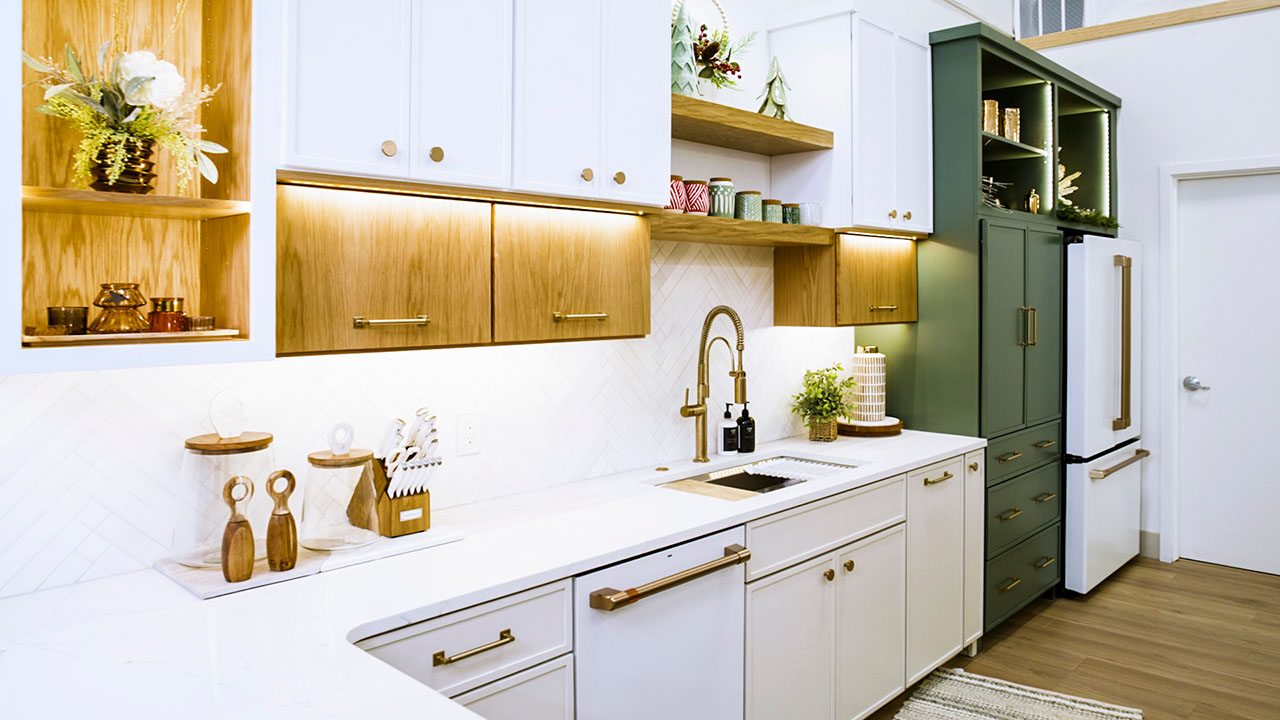
- Painted cabinets. A painted perimeter with a white oak island is one of the most popular ways to use it. It brings warmth to the room without going all-wood.
- The range hood. A white oak band across a painted hood, or a fully stained hood, ties the wood into the rest of the kitchen.
- Countertops. Warm whites with soft veining keep the room light. Black or charcoal tops add contrast.
- Hardware. Black, brass and bronze all work well against white oak.
- Floors. Avoid trying to match the floor exactly. A clear contrast, lighter or darker, usually looks more intentional than a near-miss.
Some things to keep in mind
- It costs more than painted cabinetry. Real wood, and rift-sawn oak especially, costs more than painted doors.
- Every board is a little different. Color and grain vary from board to board. That's part of the appeal, and good grain matching keeps it looking intentional.
- Light changes the color. Look at samples in your own home, at different times of day, before you decide.
- Wood moves with the seasons. Keeping indoor humidity steady protects white oak, along with your floors and trim.
Plan it early
Choose the cut and stain at the same time as your floors, countertops and paint colors, so the whole room works together. Our 8-step selection process walks through those decisions in order, and you can try combinations in our door style tool before you visit.
FAQ
- Are white oak cabinets still in style?
- Yes. White oak has become a favorite for warm, natural kitchens, and its strength and simple grain make it a choice that should age well, especially paired with a classic door style.
- Is white oak good for kitchen cabinets?
- Yes. It's a dense, strong hardwood that resists moisture better than many woods, and with a good finish it holds up well to daily kitchen use.
- What's the difference between white oak and red oak?
- White oak has a more neutral, tan-to-olive color, while red oak leans pink. White oak's closed grain also makes it more water-resistant, and its grain pattern is usually calmer.
- Should I choose rift-sawn or plain-sawn white oak?
- Choose rift-sawn for straight, quiet grain and a more modern look. Choose plain-sawn for the arching cathedral grain and a more traditional or rustic feel. Rift-sawn costs more.
- Do white oak cabinets change color over time?
- All wood changes somewhat with light. White oak tends to warm slightly over the years, and the finish makes a difference. Ask your cabinetmaker what topcoat they use and how it ages.
- Can I mix white oak with painted cabinets?
- Yes. A painted perimeter with a white oak island, or painted uppers over white oak lowers, are both popular ways to bring in warmth without making the whole kitchen wood.
Talk it through with us
Planning a kitchen with white oak? Bring photos of your space and the looks you love, and we'll talk it through with you at our Fulton Street showroom, with real samples in hand. Call (616) 940-5001 or start the conversation.