A custom range hood is a decorative enclosure, usually wood, built around a ventilation insert from an appliance maker. The insert does the work of pulling out smoke, steam and grease. The hood is what you see. Getting one right means choosing the insert first, sizing the hood to your range and ceiling, and planning the ductwork before anything is built.
The hood has become the centerpiece of many high-end kitchens we build in Grand Rapids and along the Lakeshore. Here's what to know.
How a custom hood works
It's best to think of it in two parts:
- The insert (sometimes called a liner or power pack) contains the fan, filters and lights. It comes from a ventilation or appliance brand and determines how well the hood performs.
- The enclosure is the cabinetry around it. We build it in our shop to fit the exact insert, the range below and the ceiling above.
Because the enclosure is built around the insert's dimensions, the insert has to be chosen before the hood can be designed. That one fact explains most hood delays.
Decide in this order
- Range or cooktop. Its width and how you cook set everything else.
- Ventilation insert. Match it to the range's width and output. Confirm its required mounting height above the cooking surface.
- Duct route. Decide where the air goes: through an exterior wall, up through the roof, or, as a last resort, recirculated.
- Hood size and style. With the first three settled, we can draw a hood that fits the room.
- Surrounding details. Flanking cabinets, backsplash tile, crown molding and lighting all finish around the hood.
Getting the proportions right
A hood that's too small looks like an afterthought. One that's too big overwhelms the room. A few principles help:
- Width. Make the hood at least as wide as the cooking surface, and often a bit wider, so it catches smoke and steam that drift sideways.
- Height. The insert maker specifies how far above the cooktop it must sit. The hood's shape then has to work between that point and your ceiling.
- Ceiling height. An 8-foot ceiling and a 9-foot ceiling call for different proportions. That's why every style in our hood catalog is drawn for both.
- The rest of the wall. Windows, upper cabinets and shelves on either side change how big a hood should feel. Keeping the whole wall in mind creates proper proportion when designing the hood.
Styles and materials
Our catalog includes twelve styles, among them Classic and Banded Shiplap, Craftsman, Tuscan, Modern and Tambour. You can download the hood catalog to compare them. Because each hood is built in our shop, we can also adapt a style or design something new.
Most hoods take one of three approaches:
- Painted to match the cabinetry for a quiet, built-in look.
- A contrasting paint color so the hood becomes the focal point.
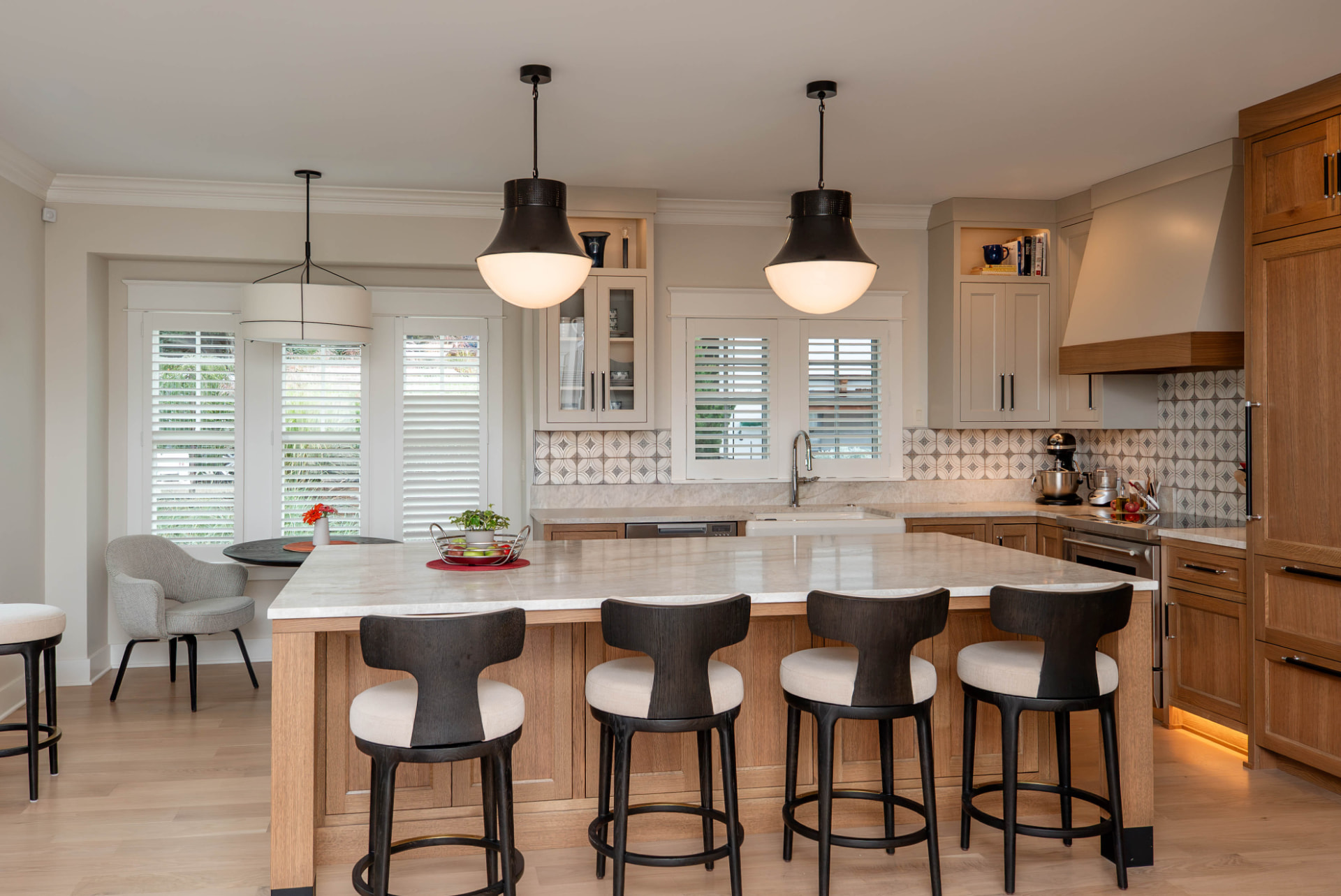
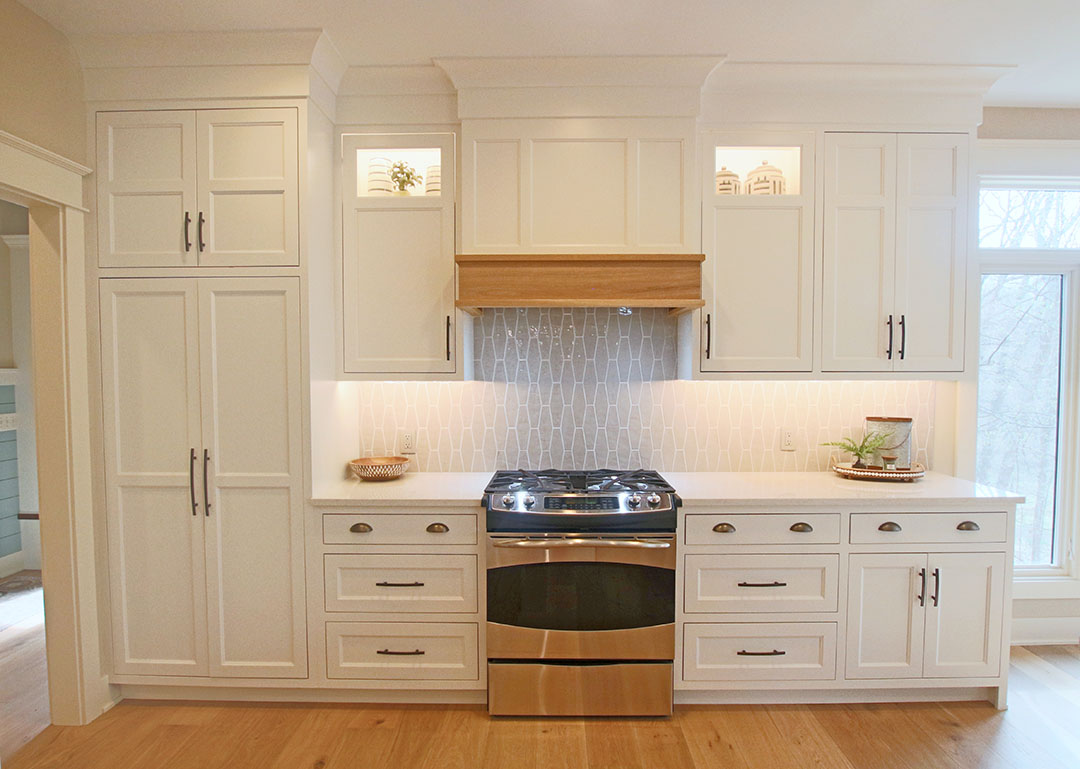
- Stained wood, such as white oak or walnut, often paired with painted cabinets for warmth. A wood band across a painted hood is also a popular middle ground.
Some kitchens use plaster or metal hoods instead. The advantage of a wood hood is that it can match or complement your cabinetry exactly, down to the door profile and finish.
Ventilation questions to settle early
- Ducted or recirculating? A hood ducted to the outside removes heat, grease and odor far better. Recirculating hoods filter and return the air to the room, and are best kept for spaces where ducting truly isn't possible.
- How much power do you need? More isn't always better. A very strong fan is louder and can pull too much air from a tight, modern house. Match the insert to your range and how you actually cook.
- Makeup air. Many building codes, including those followed in many Michigan communities, require a way to bring fresh air back in once a hood exceeds a certain fan capacity. Your HVAC contractor or local inspector can confirm what applies to your home.
- Noise. Some inserts can pair with a remote blower mounted farther along the duct or outside. It's quieter, but it needs planning.
Some things to consider
- It costs more than a stock chimney hood. You're paying for an insert plus custom cabinetry built around it.
- The insert can hold up the schedule. If it's chosen late or is backordered, the hood can't be finished.
- Ductwork can be the expensive part. In a remodel, the duct route sometimes decides where the range can go.
- It needs routine care. Filters should be cleaned regularly, and a hood above a busy range will need occasional wiping.
FAQ
- Are wood range hoods safe over a gas range?
- Yes, when the ventilation insert is sized for the range and installed at the height its maker specifies. The insert handles the heat and grease; the wood enclosure surrounds it.
- How wide should a range hood be?
- At least as wide as your cooking surface, and often a little wider. A wider hood captures more of what rises and drifts off the pans.
- Can a custom hood be added to an existing kitchen?
- Often, yes. The deciding factors are usually the duct route and the wall the range sits on. If a hood can be vented to the outside, a new custom hood can transform a kitchen without replacing every cabinet.
- Should the hood match my cabinets?
- It can, but it doesn't have to. A matching hood feels built-in and calm. A contrasting paint color or stained wood makes it the focal point. Both are timeless when the proportions are right.
- Do I need makeup air for my range hood?
- It depends on the fan's capacity and your local code. Many Michigan communities require makeup air for more powerful hoods. Ask your HVAC contractor or local building inspector early, since it affects mechanical planning.
- When should I choose my hood insert?
- Right after you choose your range, and well before cabinetry is finalized. The hood is built around the insert's exact dimensions.
See the hoods in person
Hood proportions are hard to judge on a screen. Visit our Fulton Street showroom to see hoods and finish samples at real scale, or browse our hood catalog first. We design and build custom hoods for homes across Grand Rapids, Holland, Zeeland, Rockford and the Lakeshore. Call (616) 940-5001 or start the conversation.